Scientific Machine Learning
Learning dynamics from data with structure baked in, neural ODEs/SDEs, physics-informed learning, differentiable simulation, and operator learning / neural operators.
Neural ODEsPINNsNeural OperatorsDifferentiable Sim
Max Planck Institute · Magdeburg & Tübingen, Germany
I build mathematically grounded machine learning for complex dynamical systems, bringing together probabilistic inference, scientific computing, and causality to make models that are accurate, principled, and uncertainty-aware.
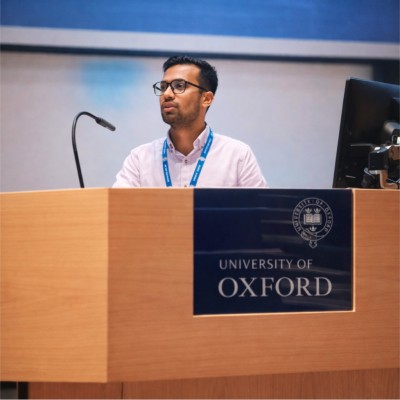
I’m a PhD researcher in the MP-AIX programme at the Max Planck Institute for Dynamics of Complex Technical Systems, jointly advised by Prof. Peter Benner and Prof. Philipp Hennig (University of Tübingen). My work sits at the meeting point of scientific machine learning, Bayesian inference, and causality.
My doctoral research centres on probabilistic causal inference in complex dynamical systems, learning the mechanisms behind data, quantifying what we don’t know, and turning operator- and equation-level structure into models that generalise. Before the PhD I completed an M.Tech at the Indian Institute of Science and worked with Siemens Healthineers, Ola Electric, AIIMS-Delhi, and IIT Delhi, with several patents in AI for healthcare and edge systems along the way.
I care about translating foundational models into robust, deployable systems, across clinical, industrial, and vehicle-scale platforms, and about doing science that is careful, reproducible, and useful.
Real-world systems, biological, physical, clinical, are dynamical, noisy, and only partially observed. I develop machine-learning methods that respect that structure: models grounded in differential equations and operators, made honest by Bayesian uncertainty, and made explanatory by causality. The goal is not just prediction, but understanding we can trust and act on.
Learning dynamics from data with structure baked in, neural ODEs/SDEs, physics-informed learning, differentiable simulation, and operator learning / neural operators.
Treating computation and modelling as inference: Bayesian inverse problems, probabilistic numerics, and calibrated uncertainty quantification.
Recovering mechanisms, not just correlations, causal structure learning and treatment-effect estimation in complex, dynamical, confounded settings (my PhD focus).
Structured representations for relational and spatiotemporal systems using GNNs and attention, from multi-agent dynamics to clinical time-series.
Putting the methods to work: electronic health records, medical imaging, and scientific applications where reliability and interpretability matter.
Learning to synthesize valid instrumental variables from observed covariates with a graph-attention network, for less-biased treatment-effect estimation under unobserved confounding (2SLS, evaluated on LaLonde).
Self-supervised spatio-temporal GNN embeddings feeding a constraint-based (PC) discovery step to recover directed spatial–temporal dependencies beyond Granger causality, on the METR-LA sensor network.
Signature-kernel conditional-independence testing (rough-path theory) combined with GNN-derived biomedical knowledge graphs for sample-efficient causal discovery in clinical time-series (MIMIC-III).
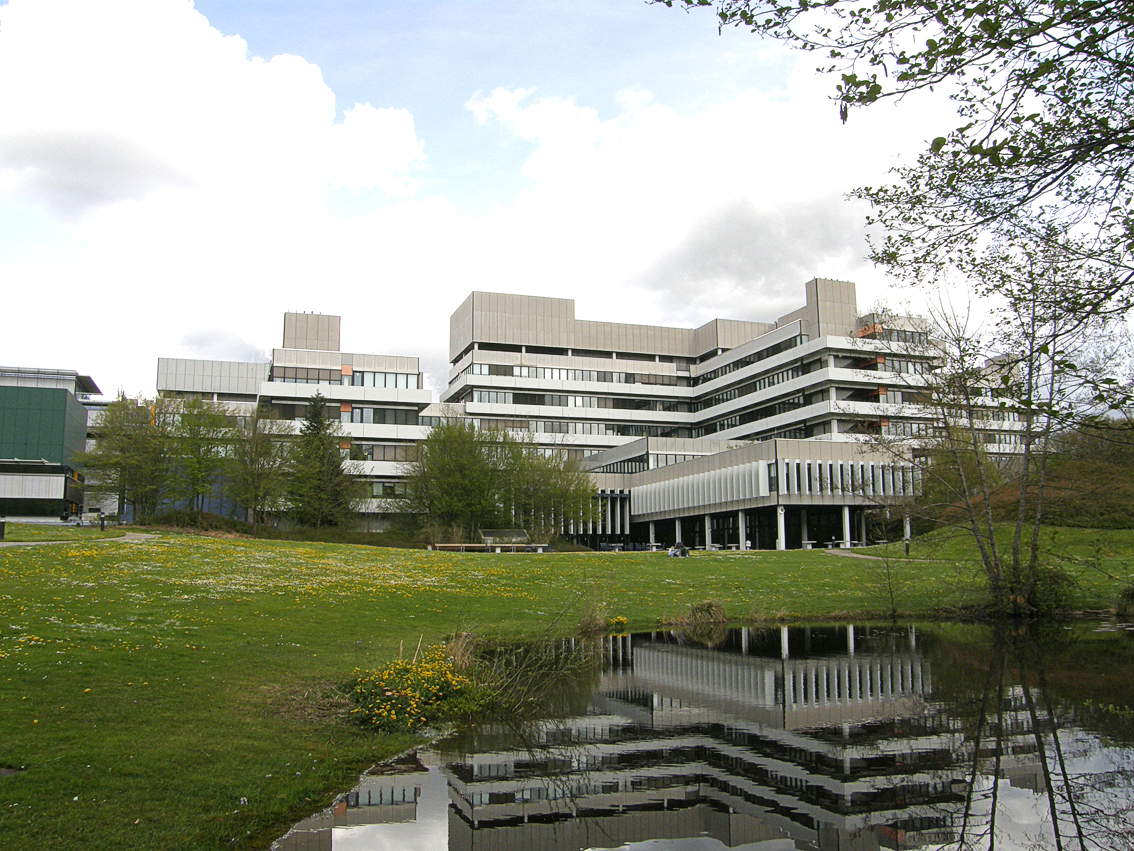
I’ll be attending the Machine Learning Summer School in Tübingen, looking forward to a couple of weeks of talks, posters, and conversations with the community. Photos and notes to follow here.
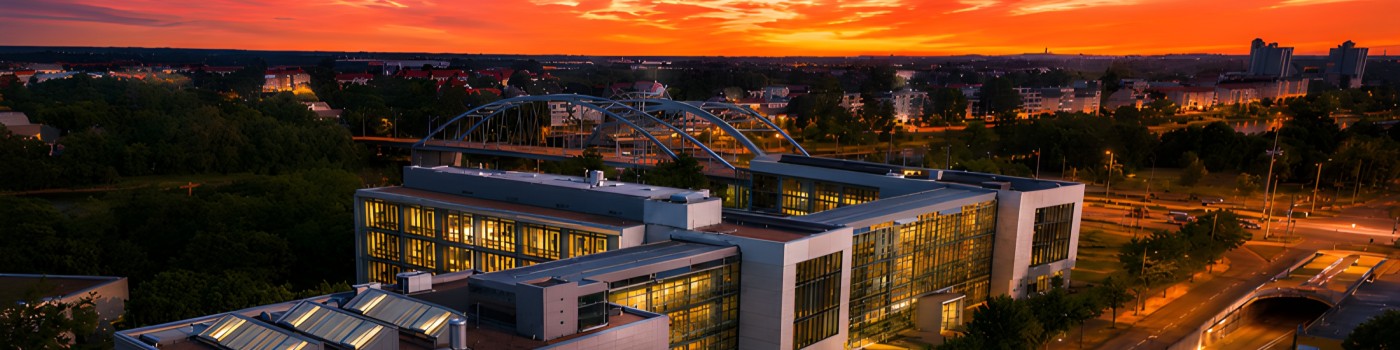
I’ve joined the Max Planck Institute for Dynamics of Complex Technical Systems as a doctoral researcher in the MP-AIX programme, advised by Prof. Peter Benner and Prof. Philipp Hennig, working on probabilistic causal inference in complex dynamical systems.
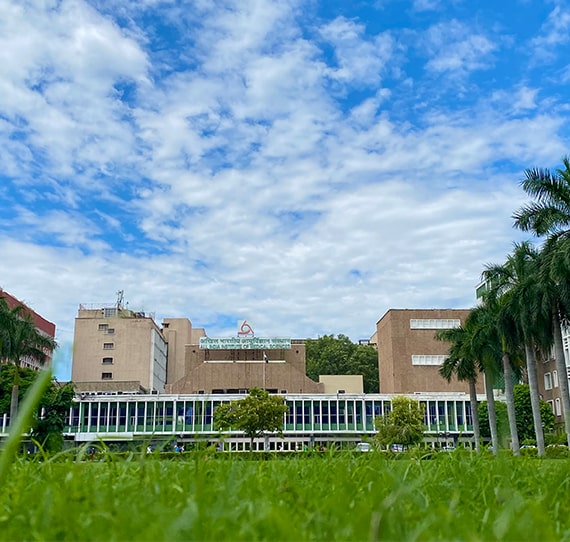
Co-developed and validated “Arogya Sankalp”, an AI-powered oral-cancer screening app for frontline health workers, and drafted a clinical randomized-controlled-trial proposal for the Evidence-for-AI-in-Health initiative.
Affiliations & communities




I’m always glad to hear from fellow researchers and students, about scientific & probabilistic ML, causal inference, ML for science and health, or potential collaborations.